It is 8:40am on a Monday, and an associate at a growth equity fund is re-exporting last week's pipeline into a spreadsheet, reformatting it by hand so it matches the template the investment committee expects at 9am. The CRM has the real numbers. The spread sheet has the version partners will actually look at. No single person chose this as the ideal process. It is what happens when a CRM, a reporting template, and an IC's expectations were each set up separately, at different times, by people solving a real problem in front of them at the time. The result works. It just requires a person in the middle every single week to make it work.
 |
That associate is not alone in patching the gaps between systems. Down the hall, another associate under the same deadline pressure, without a fast enough way to get a first draft out of the firm's own systems is pasting a target's financials into a personal Claude or ChatGPT account to get an IC memo drafted before end of day. It is a smaller decision than it sounds like, made under real time pressure, and it is also confidential deal information leaving the firm's controlled environment, often in direct tension with the same information-handling policies the firm asks every employee to sign. Nobody intends a breach. What actually happens is that the sanctioned tools are too slow for the deadline, and the workaround is faster. It works, until an LP asks for a record of how a number was produced, a regulator asks who had access to what, or the associate leaves and takes the context and the exposure with them. At that point, "it works" turns out to have meant "no one had checked."
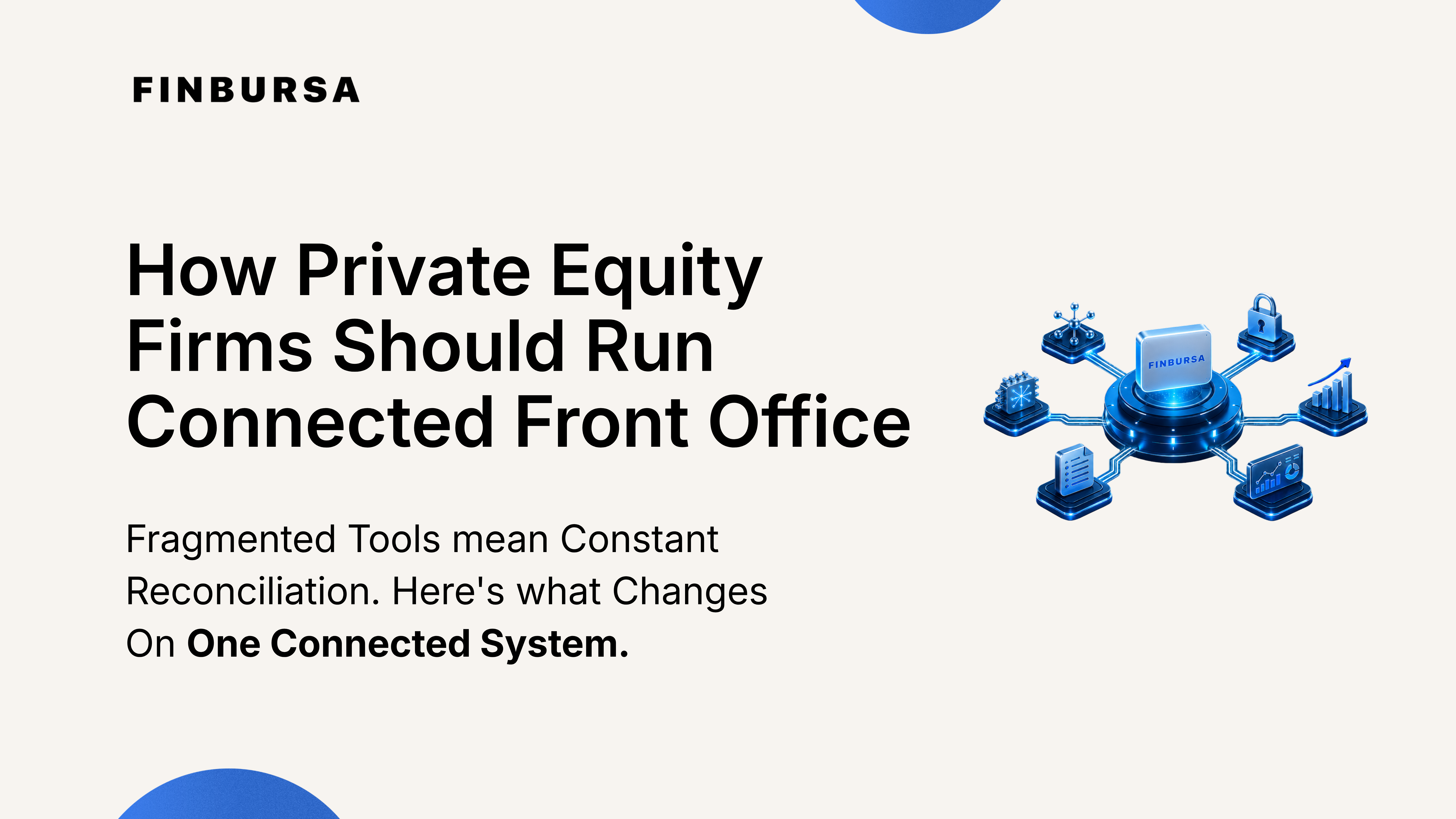
The private equity deal lifecycle is one continuous thread origination, diligence, close, fundraise, portfolio monitoring, LP reporting but the tools most firms run it on are not. The lifecycle spans years; the day-to-day workflow inside it is measured in weeks, sometimes hours, and it's at that granular level that most of the friction actually lives in the IC workflow, the diligence workflow, the memo that has to move between three people before Monday's meeting. This is also why the search for the best CRM for private equity firms so often turns up the wrong answer: a strong CRM alone does not fix a fragmented lifecycle or a broken workflow, because the problem was never the CRM in isolation. Every handoff between a CRM, a virtual data room, and an LP reporting tool is a place where context gets lost, delayed, or quietly rewritten in translation. This is what it looks like to run both the lifecycle and the workflow inside it on a single, connected system instead.
One Lifecycle, Five Tools: Where PE Firms Lose Context
A typical PE firm's stack breaks the deal lifecycle into pieces that were never designed to share a common record. Origination and relationship tracking live in a CRM, separate from the deal management workflow that should sit right next to it the stages, tasks, and approvals a deal actually moves through from first screen to close. Diligence runs through a separate virtual data room, licensed deal by deal, often at a new cost each time. The fundraise runs through a third tool, or a set of email threads and PDF subscription documents. LP reporting runs through a fourth sometimes a dedicated portal, sometimes a shared drive and a quarterly scramble owned by whoever on the investor relations team drew the short straw that quarter.
Each handoff between these tools is a place where something breaks quietly. A relationship built during origination doesn't automatically carry into the diligence room, so the advisor who sourced the deal has to be re-added, re-permissioned, re-briefed and the firm's actual deal flow picture fragments across two systems that no longer agree on where a given opportunity stands. A capital commitment made during the fundraise doesn't automatically appear in the LP reporting tool, so someone re-enters it, and now there are two versions of the commitment on file: one the general partner (GP) is tracking internally, one the LP can see. An IC memo drafted from a personal AI account never makes it back into the deal's official record, so the next person to open that deal has no idea it exists.
None of this is a single team's failure. It is what happens when five tools each hold a piece of the truth, and a person has to carry information between them by hand, every time. Ask any associate how long it takes to answer a simple question. "What's our full history with this co-investor across every fund?" Honestly, and the answer is rarely "instantly." It usually involves a CRM search, a scan through old email threads, and a message to who ever on the team has been at the firm longest. That delay is not a training problem. It is what a fragmented system of record produces by design, no matter how capable the people working within it are.
The Connected PE Lifecycle: From First Origination to Final Distribution
A connected front office handles the same lifecycle as five continuous stages, not five separate systems, and it is a more useful way to evaluate the best CRM for private equity firms than comparing feature lists in isolation, because the CRM's value depends entirely on what it is, or isn't, connected to.
1. Origination infrastructure
Every counterparty, a co-investor, an intermediary, a portfolio company executive, an advisor lives in one relationship system with full sourcing attribution. Before any call or meeting, the deal team sees the firm's complete history with that person or company, and the firm's overall deal flow stays visible in one place, not scattered across an inbox and a spreadsheet nobody else has opened.
2. Pipeline and IC
This is where deal management software earns its name: configurable stages take a deal from initial screen through IC approval, with memo workflows and signoffs built into the pipeline itself rather than assembled separately the night before a meeting. The 9am spreadsheet re-export disappears, because the pipeline the partners see on Monday is the same live record the deal team has been updating all week.
3. Diligence
Each deal gets its own VDR for private equity diligence, a virtual data room provisioned at no additional per-deal cost, with NDA enforcement, staged document access, and advisor permissioning built into the diligence workflow itself. External counsel, accountants, and consultants get exactly the access the deal calls for, and nothing more, without a new contract or a new environment for every transaction. As the deal moves toward a term sheet and eventual close, the same room holds the full negotiation history. Nothing is re-created in a separate system once terms are agreed.
4. Fundraise and co-invest
Capital raising and co-investor syndication run as a structured campaign against the same underlying deal and track record data used everywhere else in the firm, not rebuilt from scratch in a separate fundraising tool, and not reconstructed by an associate pulling numbers from three places to prove performance to a prospective LP.
5. LP reporting without reconciliation
This is the step that matters most, and the one most PE stacks quietly fail at: the LP who commits capital during a fundraise is the same record that receives capital call notices, quarterly reports, and portfolio company updates through LP portal software built into the same system from Fund I through Fund III, without ever being re-entered. This is where investor relations spends most of its time today, reconciling a CRM, a fundraising tool, and a portfolio monitoring spreadsheet that don't agree with each other. In a connected front office, the investor relations team is producing reports from one record instead of assembling them from three.
What This Stack Actually Costs
Firms researching the best CRM for private equity firms often start by comparing per-seat pricing, without accounting for what sits around the CRM once it's live. The visible cost of atypical PE stack is the sum of its subscriptions. A rough illustration, using order-of magnitude figures rather than any specific vendor's pricing:
CRM — a recurring annual license, typically scaled by seat count
Virtual data room — priced per deal, often per transaction or per project, meaning the fee recurs every time a new deal enters diligence
LP portal or fundraising software — a separate annual license, frequently sold apart from both the CRM and the VDR
Portfolio monitoring software — commonly a fourth line item, especially once a firm has enough portfolio companies that spreadsheet-based tracking stops working
Three to five contracts, three to five renewal negotiations, three to five security reviews, before counting the labor cost of keeping them reconciled. The larger cost is the one that doesn't show up as a line item. A firm closing five deals a year pays a data room fee five separate times, once per transaction, for a capability that should not carry a marginal cost at all. A firm running a fund series pays it again in operations time: assembling a clean LP report from a CRM, a fundraising tool, and a portfolio monitoring spreadsheet that don't agree with each other, every quarter, for the life of the fund usually the same investor relations function absorbing the reconciliation work each cycle.
A connected front office collapses this into one contract, one procurement cycle, and ones security review with unlimited data rooms at no per-deal cost, and one continuous LP record instead of three reconciled ones. The saving is not just the subscriptions avoided; it is the quarterly reporting cycle that stops being a research project, and the investor relations team that stops being the manual translation layer between systems that were never designed to agree.
Where General-Purpose AI Fails Regulated Deal Workflows
The same fragmentation that creates re-entry and reconciliation work is also what makes ad hoc AI use risky rather than merely informal. A personal AI account has no audit trail an LP or a regulator can review. It has no permission boundary tied to the firm's actual access rules it cannot tell the difference between a document a junior associate should see and one only a partner should. And it has no institutional memory: when the person who ran the query leaves the firm, whatever context they built disappears with them.
This is precisely the gap that purpose-built AI for private equity deal teams is meant to close, and it cannot be closed by a general-purpose assistant bolted onto the side of the firm's real systems. AI embedded inside a connected front office does not have this problem, because it is not a separate system with its own limited view. It works from the same permissioned, audited record everyone else on the deal team uses, meaning it can help draft an IC memo, summarize a data room, or prepare a portfolio company update without ever operating outside the boundaries the firm has already set.
Consider the difference in practice. An associate using a personal AI account to summarize a target's financials produces a useful paragraph, but no one else on the deal team can see it was generated, what it was based on, or whether it should be trusted for the IC memo. The same request, made inside a connected front office, draws on the deal's actual record the documents already in the data room, the notes already logged against the relationship and the output becomes part of that same auditable record automatically. The difference is not the quality of the AI's answer. It is whether the firm can show, months or years later, exactly how that answer was produced and who had access to what it was built from.
The Native Answer
FinBursa 360 is built as this kind of connected front office for private equity firms: one environment for origination, deal management, diligence, fundraising, and LP reporting, with AI available natively across all of it regardless of which LLM the firm chooses to use. Deals, relationships, and LP records stay in one continuous system from first meeting to final distribution, with unlimited data rooms at no per-deal cost and a single home for the investor relations reporting that today gets assembled by hand.
For the partner or principal — see how LP reporting and IC workflows run natively on one platform, without reconciliation: explore the private equity solution.
For the ops or IR lead — see exactly what replaces the current CRM, VDR, and reporting stack: explore the FinBursa 360 platform.