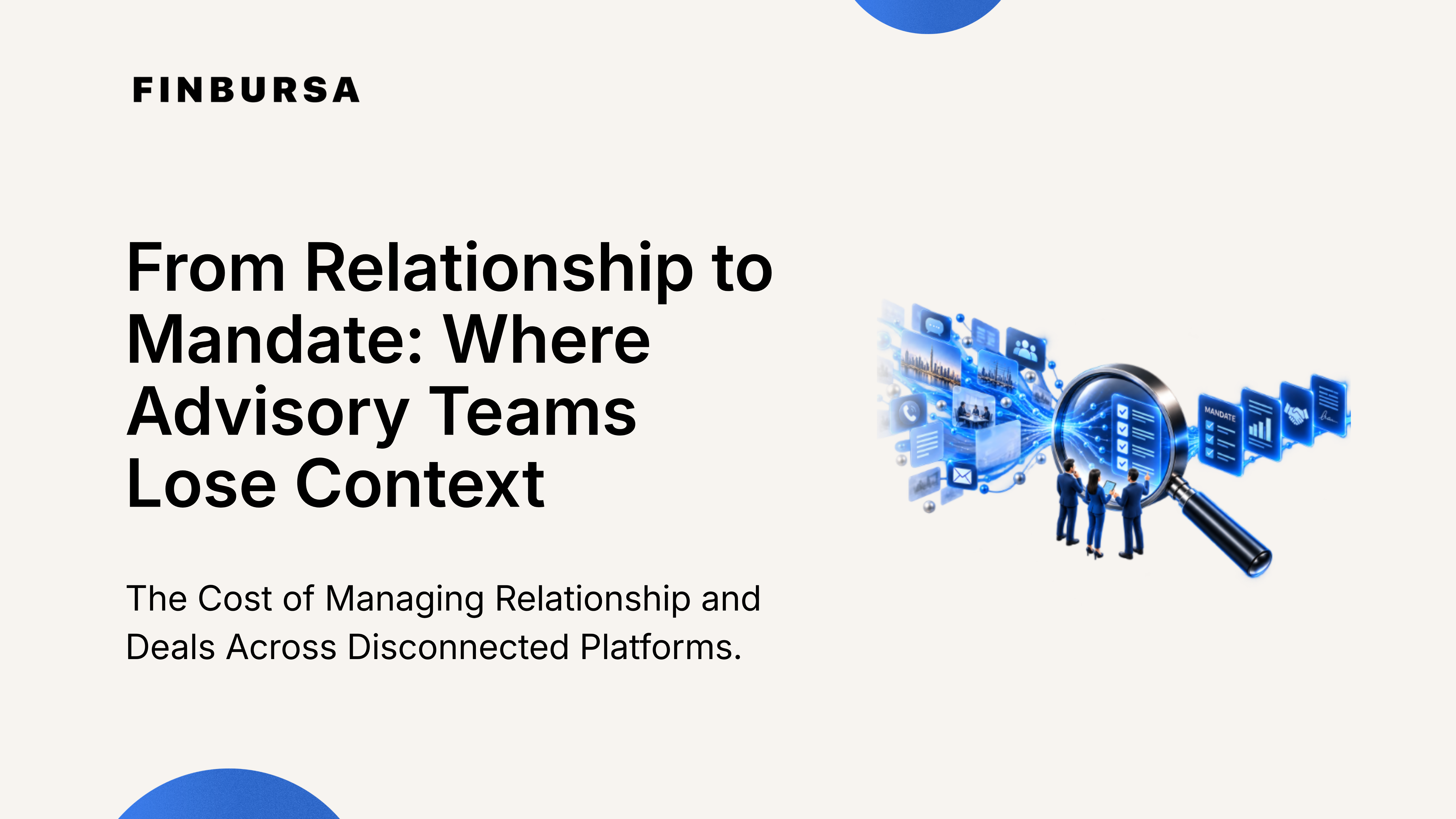
Many founders still experience fundraising as a closed loop. Capital seems to move through invisible channels, while the same advice circulates repeatedly: get warm introductions, refine the deck, follow up, and wait.
What often goes unexamined is a more uncomfortable reality. Most investors already operate through discovery. Founders are not failing because they pitch poorly. They struggle because they are not showing up where investor discovery already happens.
In markets like the UAE, where private capital is professionalizing quickly, understanding how investors actually find startups has become a practical requirement. It increasingly determines whether founders spend months chasing meetings or build sustained investor exposure over time.
How Investors Actually Source Deals
Despite the emphasis founders place on inbound pitches, most investors do not build their pipelines that way.
Research from the Kauffman Fellows Research Center and similar industry studies consistently shows that the majority of venture deals originate from proactive sourcing. That sourcing includes internal research, ecosystem mapping, tracking founders long before they raise, and referrals from portfolio companies and trusted operators.
In practice, funds run structured sourcing processes. Analysts and associates monitor defined sectors, geographies, and founder profiles. They track accelerators, operator communities, emerging signals, and increasingly, structured digital environments where early evidence accumulates.
In the UAE ecosystem, this behavior is shaped by market focus and risk management. Funds tend to operate with clear thematic filters such as fintech, healthtech, enterprise software, logistics, climate, or infrastructure-adjacent businesses. Startups outside those filters remain invisible regardless of outreach volume.
Why Warm Introductions Are Overvalued
Warm introductions still matter, but founders often misunderstand what they do.
An introduction rarely creates conviction. It simply opens a door that already existed. By the time a meeting happens, investors typically have a working view on mandate fit, perceived risk, and relevance.
Academic research on venture decision making, including work from Harvard Business School, shows that investors form early opinions before formal meetings. Pattern recognition, prior exposure, and perceived execution risk shape those views long before a pitch deck enters the room.
In relationship-driven ecosystems like the UAE, introductions can feel like progress. In reality, they only accelerate a decision that was already forming. Without traction, clarity, and governance, introductions tend to speed up rejection rather than reduce it.
Platforms Are Replacing Intermediaries
Historically, intermediaries such as brokers and advisors controlled access to investors. Their value came from packaging companies and pushing them through personal networks.
That model is weakening.
Globally, venture firms increasingly rely on internal databases, structured dashboards, and startup intelligence platforms to track companies over time. Industry reporting from CB Insights and PitchBook points to a steady shift toward systems that allow investors to observe progress continuously rather than evaluate companies only at fundraising moments.
The key difference between platforms and intermediaries lies in timing. Platforms allow passive exposure. Investors can follow execution, governance signals, and market validation over time through a private fundraising marketplace without committing to meetings.
In the UAE, this shift aligns with broader institutionalisation. Funds are adopting sourcing and risk processes that reduce dependence on informal networks and make it harder to miss high-quality but under-connected founders.
What Actually Creates Investor Exposure
Investor exposure is a signal problem.
Investors look for indicators that a startup understands its market and operates with discipline. Those indicators include clear business models, transparent metrics, coherent narratives across updates, and credible governance.
Equally important is legibility. An investor should be able to understand what the company does, who it serves, and why it matters without a meeting. When that understanding requires synchronous explanation, exposure breaks down.
In the region's context, exposure increasingly depends on compliance readiness, shareholder structure, and regulatory awareness. These are not late-stage concerns. They often function as early filters.
Why Governance Matters More Than the Deck
Pitch decks still play a role, but they increasingly confirm decisions rather than create them.
Governance, by contrast, has become a primary exposure signal. Regional research, including PwC Middle East’s work on private capital, consistently highlights governance quality as a top risk factor assessed by investors, even at early stages.
Cap table clarity, shareholder agreements, reporting discipline, and decision-making structure shape perceived execution risk. Weak governance amplifies uncertainty, regardless of product quality.
In a cross-border market like Dubai, governance often serves as a proxy for founder maturity. Investors use it to assess whether a company can scale responsibly within and beyond the UAE.
A polished deck cannot compensate for structural ambiguity.
Fundraising Is Infrastructure, Not an Event
The most important shift founders can make is to stop treating fundraising as a moment in time.
Investors form conviction gradually. They observe execution, track progress, and update internal views over months or years. By the time a formal raise begins, much of the decision framework already exists.
Discovery-based fundraising means building fundraising infrastructure that allows investors to observe the company before capital is needed. That includes maintaining structured information, documenting traction consistently, and making governance visible.
Platforms like FinBursa reflect this shift by enabling founders to get investor exposure within environments where investors already operate, rather than relying solely on outbound outreach or introductions.
Closing Perspective
Many founders assume investor discovery is opaque or inaccessible. In practice, discovery already exists. The gap lies in participation.
Cold outreach and reliance on introductions feel active, which makes them psychologically appealing. Discovery feels passive by comparison. But passive does not mean powerless. It means building the right structures so that when investors look, the company is already legible.
Fundraising today is less about asking and more about being observable over time.
For founders operating in increasingly institutional markets, learning how to get investor exposure within existing discovery systems is no longer optional. It is part of how capital now moves.
If you are preparing for a raise, List Your Fundraising Today to become discoverable to the investors who are already searching.